Why I stopped selling the two-day version of Toubkal
The two-day Toubkal trip was the first itinerary I costed. It is cheaper to run, it fits a weekend without anybody taking leave, and people do summit on it. I cut it anyway, before we had sold a single seat, and this is the arithmetic that made me do it.
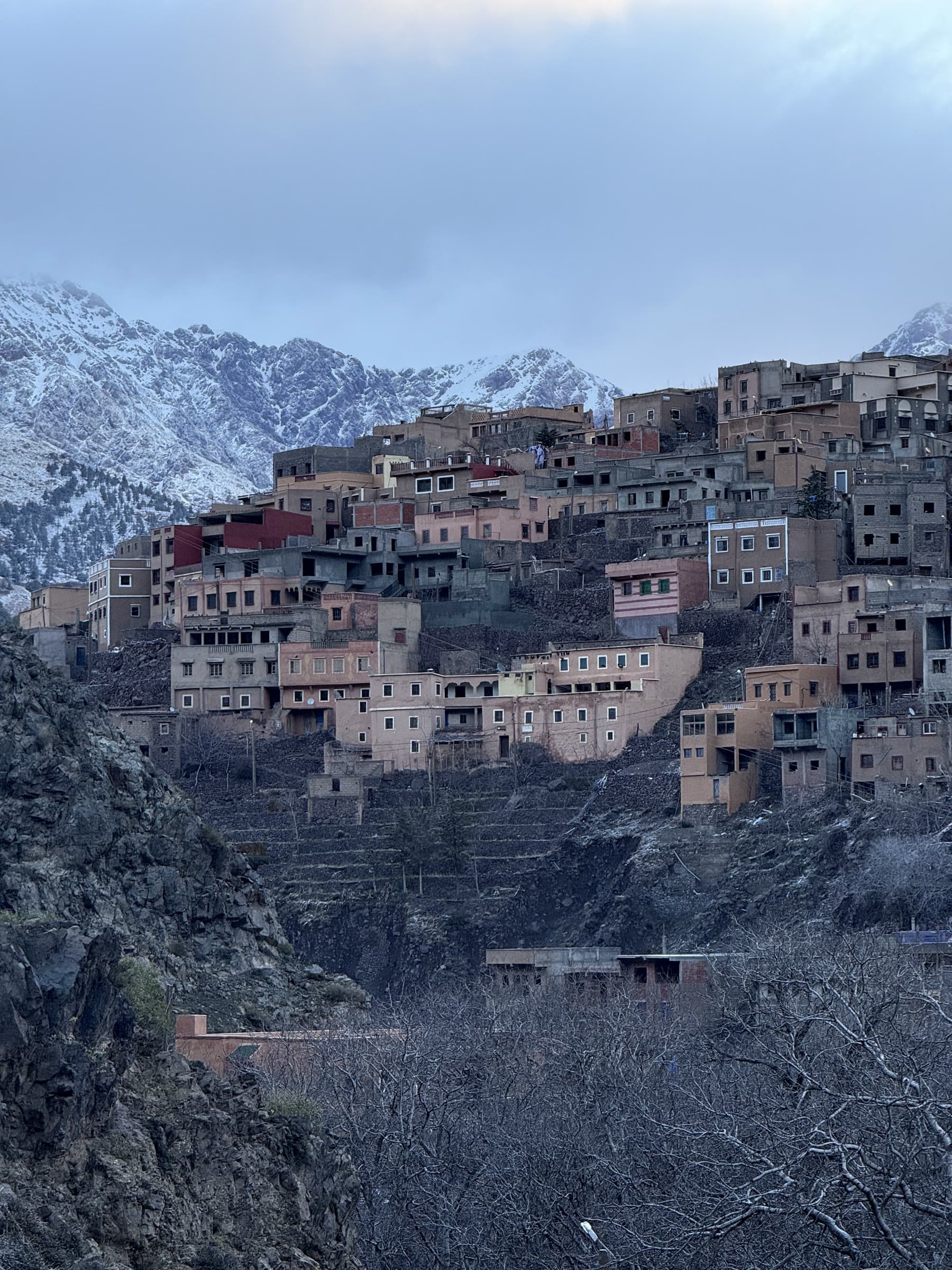
AREMD 1,900 M
THE VERSION I COSTED FIRST
The two-day Toubkal trip is the obvious product, and it was the first one I put on a spreadsheet. You land at Marrakech, you are driven two hours up the valley, you walk from Imlil at 1,740 m to the refuge at 3,207 m the same day, you summit at first light the next morning and you are back in the city by evening. One night instead of two. One guide day instead of two. One transfer window instead of two, and no Friday, which means nobody has to take a day off work to come. Read like that it is a better business than the trip we actually sell — cheaper for me to run, cheaper to advertise, and it wins any list of Toubkal trips sorted by price or by length. It is also, judging by my inbox, the version most people already have in their heads when they write to me. They ask whether the third day is really necessary. That is a fair question and it deserves an answer with numbers in it rather than a paragraph about our philosophy.
IT WORKS, WHICH IS THE PROBLEM
Here is the part usually left out of this argument, and I will not leave it out: the two-day version works. People summit on it, and I watch them do it from the same trail. The normal route up Toubkal needs no technical climbing and no prior hiking experience — if you are comfortable walking six to eight hours on rough ground you can walk this mountain, and I rate the fitness at three out of five. So if you are reasonably fit, if you happen to sleep well at 3,207 m, and if the weather holds on the one morning you have got, you will stand at 4,167 m and your photograph will be exactly as good as anybody else's. That is precisely why it is seductive. The people it worked for are the ones who post about it. The people it did not work for come home quietly and tell themselves they were not fit enough, which in most cases is not true. A schedule that works when everything goes right is not really a schedule. It is a bet, and it is being placed with your flight, your leave and your one weekend on this mountain.
WHAT DUSK AT THE REFUGE LOOKS LIKE
I have spent a lot of weekends in that building. It holds roughly forty people — dorm bunks, blankets, a shared table, no shower. You can pick the two-day groups out by the hour they come through the door. They arrive as the light goes, having gained 1,467 m from Imlil in one push on the back of a flight and a drive, and the first thing you notice is that they do not eat. Appetite is what altitude takes first. Then comes a first night at 3,207 m with no night above 450 m behind it: the headache, waking at two, the breathing that feels wrong until somebody tells you it is not. Our line on that is fixed and I repeat it to every group — headache and poor sleep are normal up there, and anything worse than that and we go down. But normal still costs you. At 04:30 the headtorches go on, and those people begin the biggest day of the trip on a few broken hours and no dinner. Hassan has been guiding in this valley since 2012 and has more than two hundred Toubkal summits behind him; he watches the same thing happen from the front of the line. Legs are rarely what stops them. It is two days of no margin arriving all at once.
WHAT THE THIRD DAY ACTUALLY BUYS
Two things, and both are unglamorous. First, a night at 1,900 m in Aremd before you climb anything that matters — a 45-minute walk and 160 m of ascent off the road, dinner with a family, a kit check, and a briefing that goes through the next two days hour by hour. Sleeping at 1,900 m on Friday starts your acclimatisation a full day before the climb, which is the cheapest thing I can do for your chances. Second, an afternoon arrival at the refuge instead of a dusk one. From Aremd it is 10 km and 1,307 m of ascent, about six hours, so we are through the door with light to spare — rest, an oxygen check, an early dinner, asleep by nine. Then 04:30, 13 km, 960 m up and 2,427 m down, about nine hours moving. Notice what does not change. It is 29 km and 2,427 m of ascent either way. We do not make the mountain smaller. We split it 160, then 1,307, then 960, instead of 1,467 and then 960 — and the difference between those two arithmetics is whether or not you slept before summit day.
THE ATTEMPT I FAILED
I am not neutral about any of this. My own first attempt on Toubkal was a December ascent and I turned back short of the summit. I went back two months later and stood on top, and the only thing that had changed was preparation — the same legs, the same mountain, a different set-up. I grew up in Belgium and came to mountaineering as an adult, so I had no inherited feel for it to fall back on. What that December taught me is that you can spend all of your margin before the decision point ever arrives, and then the decision gets made for you rather than by you. In my case the margin I had spent was winter kit and winter experience. On a two-day schedule the margin you spend is time, and it is gone before you have taken a single step above the refuge. You cannot buy it back at 05:45 in the upper cwm with the light coming. That is the whole of my argument, and I would rather make it out of my own failed attempt than somebody else's.
WHERE FIRST ATTEMPTS ACTUALLY FAIL
A lot of first attempts on this mountain do not end at the summit. I cannot give you a number for that — nobody publishes one, and what follows is what I see from the valley rather than anything I can source — but when I look at why, it is almost never fitness. It is a group that never synchronised, a pace nobody in it chose, and a schedule with no room in it, and those three compound, because a pace set by the fastest walker in a big group quietly wrecks the slowest few before the day that matters even starts. Our answers to it are structural rather than inspirational. The group is capped at eight. The guide-to-walker ratio is 1:4 on summit day, which means a group can split rather than break. If you are the slowest person there, the group walks at your pace or it splits with the second guide, and neither of those is a favour — it is the thing you paid for. Turnaround time is 09:00 and it is fixed, and Hassan has the final word rather than the group, because a fixed time only survives contact with people who have flown a long way if somebody other than them is holding it. Groups mix visitors with Moroccan climbers, incidentally, because Moroccans climb at weekends and weekends are when we run.
WHAT THE DECISION COSTS
It costs everybody money and that is worth saying plainly. Three days at €350 per person costs you more than the two-day version I costed would have, and it leaves me with less of it, because the extra day is a night in the valley gite, a second day of a certified guide, a second transfer window and another two meals. So you pay more and I earn less per seat, and I lose the comparison every time somebody sorts a list by price. That was the trade, made deliberately, before we sold a single place. What the €350 covers is both nights, return transport from and to Marrakech, all breakfasts and dinners plus two trail lunches, crampons and an ice axe in season, poles, a refuge sleeping bag, group first aid and oxygen, and all park fees and permits. A €120 deposit holds a place and the balance comes later. There is no single supplement, and a private room in the valley gite costs nothing extra, subject to what the house has that weekend — the refuge is dorms only, for everyone. If the guide turns your group around, the attempt is on us: a free date change, and you pay only for the refuge night. Flights, insurance, your own boots and clothing and tips are yours. Insurance is required and we check it.
A SUMMIT YOU WERE DRAGGED TO
Nobody flies to Marrakech in order to be dragged up 4,167 m. What stays with me from mornings up there is almost never the top itself — it is first light on the ridge around 06:55, second breakfast back at the refuge at 09:40, the long walk down into the valley, then a shower and a long lunch in Imlil before the drive back. A summit reached by somebody who has not slept and has not eaten does not come with any of that attached. It comes with a photograph and a headache, and that is the wrong souvenir to fly home with. So the weekend trek is three days, Friday to Sunday, and it will stay three days. Our first departures are October 2026, which means I have no completed trips and no reviews to show you, and I would rather write that down than dress it up. What I can show you is the itinerary and the reasoning behind every hour in it. If you still think the third day is unnecessary, write and tell me so — I answer everything myself, usually within a few hours, and I would much rather argue about it before you book than afterwards.
THE TWO-DAY ITINERARY WAS COSTED AND CUT BEFORE LAUNCH · FIRST DEPARTURES OCTOBER 2026, NO COMPLETED TRIPS YET