Toubkal month by month, from the weekends I spend up there
People ask me which month is best. The honest answer is that four months are excellent, four are hard work, and four are for people who own crampons and want to use them. Here is the year as I have come to know it, from the trips I run and the ones I walked before I ran any.
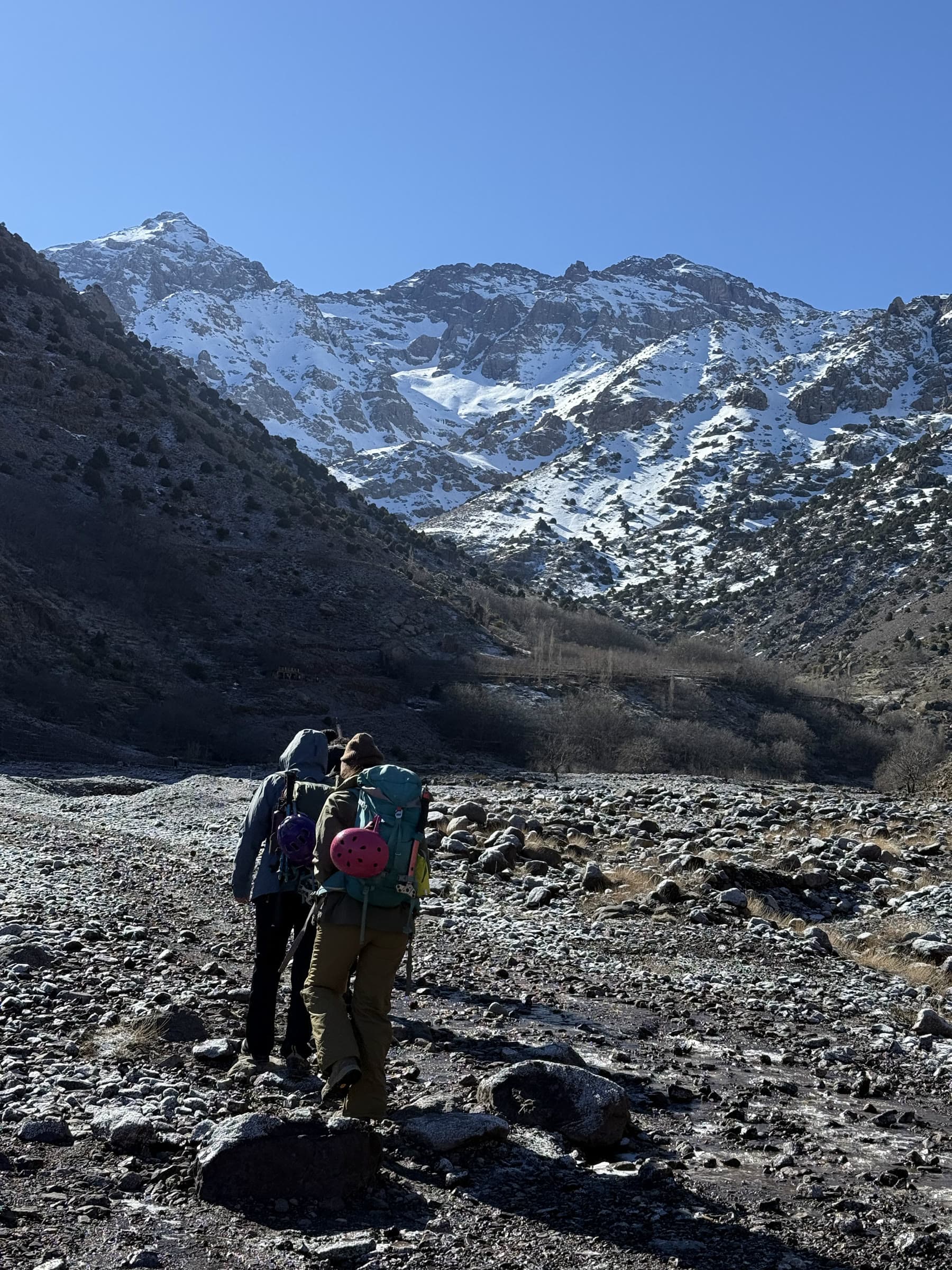
AÏT MIZANE VALLEY
DECEMBER TO MARCH · WINTER
From the first big snowfall — usually late November, sometimes not until January — the upper route changes character completely. Above the refuge it is a snow climb, not a walk. You need crampons and an axe, and you need to be shown how to use them, which the guides do at the refuge the evening before. The summit sits between −8 °C and −15 °C at sunrise and the wind on the final ridge can make that feel much worse. In exchange you get the mountain nearly to yourself, air so clear you can see the Anti-Atlas, and a refuge that smells of woodsmoke and wet wool. February holds the deepest snow. My own first attempt was a December ascent and I turned back short of the top, which is why I am blunt about this season: if a group has no winter experience at all, I will say so and suggest another month rather than sell them a summit they will not enjoy.
APRIL AND MAY · THE THAW
April is the month I am most careful about. The valley is green, the walk to the refuge is beautiful, and the upper mountain is unpredictable — soft snow that collapses under a boot, a hard frozen crust before dawn, and rockfall where the ice has let go. We still summit most weekends in April; we just start earlier and turn around earlier. By mid-May the snow line has usually retreated above 3,600 m and the route is walking again, with the added bonus that the valley is not yet hot.
JUNE TO AUGUST · SUMMER
Dry, reliable, and hot down low. Marrakech at 42 °C is a real factor, so we move early and take more water than most people expect. The summit itself is pleasant — around +8 °C at sunrise in July, which is the warmest it ever gets up there. This is the season with the most people on the trail. If you dislike company at the summit cairn, come in the shoulder months instead.
SEPTEMBER TO NOVEMBER · THE BEST WINDOW
If you let me pick your dates, I pick late September or October. The heat has broken, the snow has not arrived, the light is long and gold in the afternoon, and the refuge is busy in a good way rather than a crowded way. Summit temperatures sit between +5 °C and −4 °C at sunrise. Early November is still excellent, and then one weekend the forecast turns and we are back in winter kit, sometimes overnight.
WHAT I TELL PEOPLE WHO CAN COME ANY TIME
Book the last weekend of September or any weekend in October, and book it early — those dates fill first. If you can only travel in winter, come anyway, but come with the intention of learning something rather than ticking a summit. And whichever month you choose, give yourself the acclimatisation night. Walking this mountain at your own pace is the entire point, and a two-day dash does not leave room for it.
CONDITIONS DATA FROM OUR OWN LOGS, 2019–2026 · SUMMIT TEMPERATURES MEASURED AT SUNRISE